
Harm Reduction and the Uniform Inspection Checklist
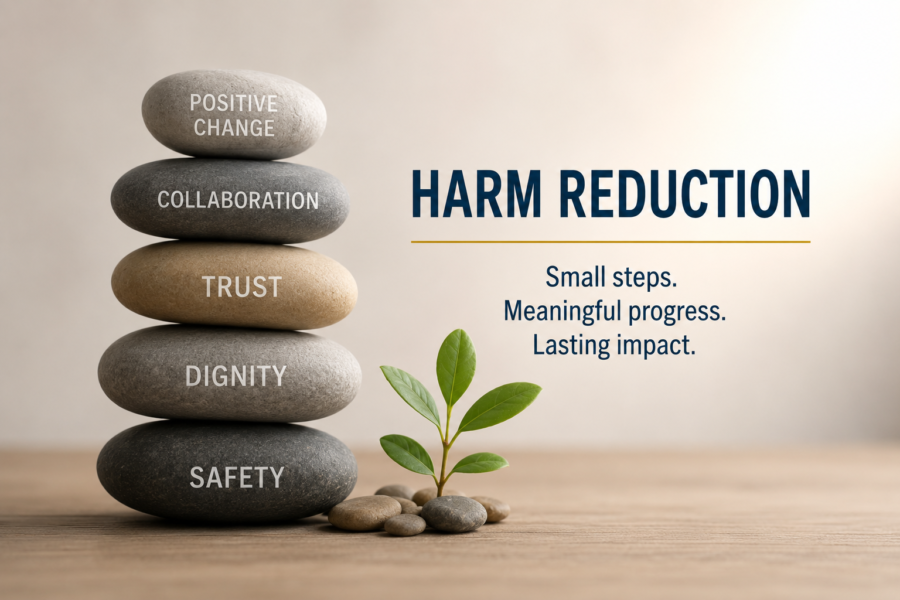 Hoarding Disorder is a complex condition that often involves significant anxiety, strong emotional attachment to possessions, impaired decision-making, and limited insight into risk. As a result, approaches that focus primarily on rapid cleanouts, compliance, or forced change frequently lead to increased anxiety, resistance, damaged relationships, and high rates of re-accumulation.
The Harm Reduction Approach is widely recognized as the most effective intervention strategy when mental health treatment is unavailable, declined, inaccessible, or insufficient on its own. Rather than focusing primarily on the clutter itself, Harm Reduction focuses on improving safety, functionality, and quality of life by addressing the most significant health, safety, housing, and access concerns first. This shift in focus reduces feelings of threat and judgment, increases psychological tolerance, minimizes anxiety, and supports meaningful engagement with residents who may otherwise be resistant to intervention.
Importantly, Harm Reduction is not an endpoint. It is often the gateway to engagement, trust-building, increased readiness for change, and eventual participation in treatment and longer-term recovery efforts. By focusing on achievable goals and measurable progress rather than demanding immediate elimination of clutter, community partners are more likely to establish productive working relationships that support lasting change. Harm Reduction helps residents experience success while preserving dignity, autonomy, and housing stability whenever possible.
The Uniform Inspection Checklist (UIC) is the only standardized Harm Reduction tool specifically designed for use in hoarded environments. The UIC provides a common framework and shared language that can be used by residents, family members, social service agencies, housing providers, public health officials, code enforcement, fire departments, mental health professionals, and other community partners. Its uniform design allows all parties to objectively identify risks, establish priorities, set reasonable goals, and monitor progress using the same criteria throughout the resolution process.
By creating consistency across disciplines and jurisdictions, the UIC improves communication, strengthens collaboration, reduces conflict, and supports more sustainable outcomes for individuals, families, and communities.
About the Uniform Inspection Checklist (UIC)
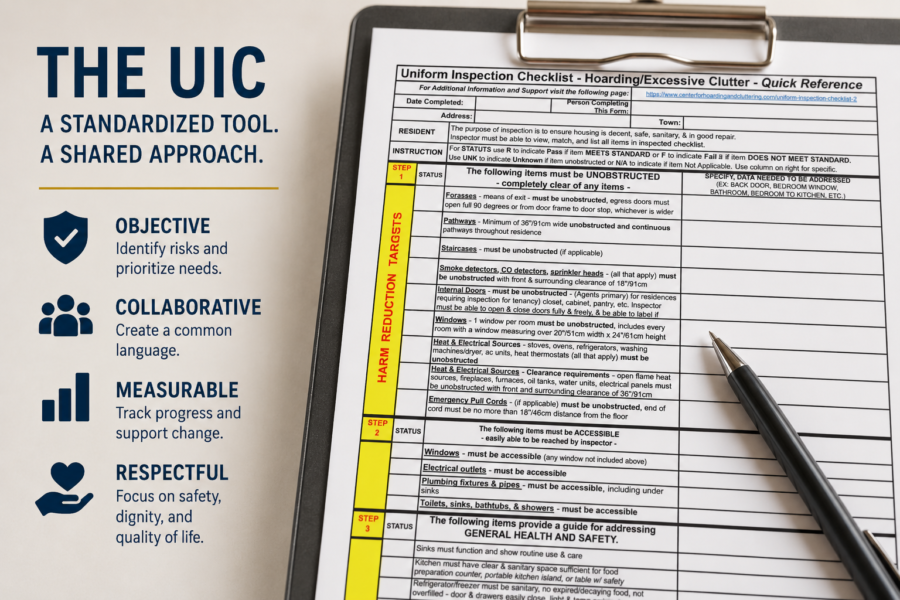 The Uniform Inspection Checklist (UIC) is a practical, evidence-informed tool designed to help users identify, assess, and address hoarded environments. The UIC enables users to objectively identify Harm Reduction priorities, establish reasonable and relevant goals, set a baseline status, and monitor and measure progress throughout the resolution process.
By utilizing a common assessment framework and shared language, community partners can collaborate more effectively, improve communication, and achieve more sustainable outcomes in complex hoarding situations.
Copyright Notice: The Uniform Inspection Checklist (UIC) is copyrighted. Modification, editing, or distribution of altered versions is prohibited. Sharing the official UIC through the provided link in communications, training materials, or other content is permitted and encouraged.
How to Use the Uniform Inspection Checklist
STEP 1: Quick Reference Assessment
This Quick Reference version of the UIC is ideal for initial assessments of suspected hoarded situations. Once completed, the Quick Reference allows team members to work together to develop mutual, objective goals. If the Quick Reference assessment leads to the development of a collaborative action plan, implement the full UIC version below as Step 2.
The UIC Quick Reference is also effective when shared with the resident, as it provides specific and concrete guidelines.
Link: Uniform Inspection Checklist — Hoarding/Excessive Clutter — Quick Reference
Use to objectively assess the residence and prioritize Harm Reduction goals.
STEP 2: Full Inspection Version
This version of the UIC is based on the HUD inspection checklist, which is the inspection most frequently failed in hoarding cases. Both versions of the UIC have proven effective in private and rental housing.
It is not recommended to provide the full version to the resident, as it can be overwhelming. All targets included in the full version are also included on the Quick Reference version.
The Full Inspection Version provides a room-by-room assessment and allows users to include a Clutter Image Rating for each room. This supports a more thorough assessment and provides a way to monitor and measure progress throughout the resolution process.
Link: Uniform Inspection Checklist — Hoarding/Excessive Clutter — Full Inspection Version
Use to establish a baseline, then monitor and measure progress throughout the resolution process.
The following video is a recording of a Facebook Live training on Hoarding and the Harm Reduction Approach.
This presentation provides an overview of Harm Reduction principles and detailed instruction on how to effectively implement both the Uniform Inspection Checklist (UIC) – Quick Reference and the Uniform Inspection Checklist (UIC) – Full Inspection Version.
Viewers will learn how to objectively assess living environments, identify priorities, establish reasonable goals, and monitor progress throughout the resolution process.