
Meet the Trainers
Agency & Community Workforce Development
Advancing Effective Community Hoarding Response
Our Agency & Community Workforce Development trainers are committed to expanding the Center for Hoarding’s professional education programs and delivering engaging, interactive training grounded in evidence-informed practices and real-world experience. Eileen Dacey, MSW, LICSW and Leslie Shapiro, MA, LMFT bring extensive clinical, educational, and community-response expertise to the development of training that reflects the complex situations professionals encounter in their work.
Their combined knowledge strengthens the Center’s ability to provide practical, relevant education that builds professional confidence, encourages collaboration across disciplines, and equips participants with strategies they can apply immediately within their agencies and communities.

Eileen Dacey, LICSW
Eileen Dacey, LICSW, is an independently licensed clinical social worker and CBT-certified therapist specializing in Hoarding Disorder, OCD-related conditions, and animal hoarding. Her work includes psychotherapy, family support, crisis response, and complex cases involving housing stability and public safety.
Through her work with the North Shore Center for Hoarding and Cluttering, Eileen has helped professionals across behavioral health, aging services, housing, animal welfare, and public safety coordinate compassionate responses to hoarding. Her advocacy helped secure Massachusetts’s first gubernatorial proclamation recognizing Hoarding Disorder Awareness Week in 2019.
Since 2017, Eileen has trained professionals across the country on possession and animal hoarding, engagement, crisis response, and community intervention. Her teaching draws on clinical practice and multidisciplinary casework to help participants understand the behavior behind the clutter, assess risk, and build workable plans with community partners. She participated in a panel on Hoarding Disorder at the 2023 International OCD Foundation Conference, and her expertise has been featured in the Boston Globe and Reader’s Digest.
Eileen is a PhD candidate and Associate Professor of Practice and Director of BSW Practicum Education at Simmons University School of Social Work. She teaches at the BSW and MSW levels, and her doctoral research examines the intersection of OCD and suicide.
Training Expertise
- Hoarding Disorder, OCD, and animal hoarding
- Engagement, Motivational Interviewing, and culturally responsive practice
- Harm reduction, crisis response, and housing stability
- Multidisciplinary case planning and community intervention
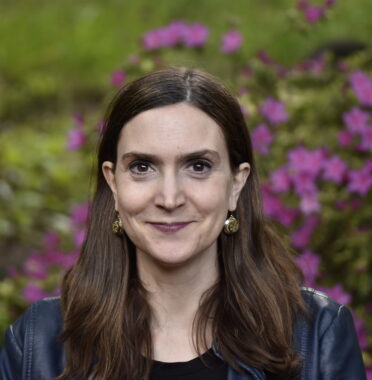
Leslie Shapiro, MA, LMFT
Leslie Shapiro, MA, LMFT, is a clinician, trainer, and consultant specializing in Hoarding Disorder and anxiety-related conditions. Formerly a Clinical Therapist at The Hoarding Project, she provided individual and group treatment, developed CBT- and Motivational Interviewing-based treatment plans, coordinated care with families and community partners, conducted research, and facilitated support groups for individuals affected by hoarding and their family members. She is also a co-author of several publications on Hoarding Disorder, including work published by SAGE.
Leslie has been providing professional training on Hoarding Disorder since 2013, educating professionals across behavioral health, social services, developmental disabilities, housing, healthcare, animal control, and other community systems. Her experience ranges from conference presentations and university education to full-day, community-based trainings focused on strengthening local hoarding response systems. She has trained professionals throughout Washington, Wisconsin, and Minnesota, including work supporting communities in developing more effective interdisciplinary reporting and response processes. Her training experience also includes state and local agencies, the University of Washington, NAMI, healthcare and aging-service organizations, and multidisciplinary community providers.
As a trainer, Leslie brings the same curiosity, thoughtful inquiry, and commitment to continued learning that have shaped her clinical work. She is particularly skilled at connecting clinical knowledge with the realities professionals encounter in the field—helping participants move beyond simply identifying hoarding to consider engagement, collaboration, and practical strategies for responding to complex situations. Her trainings encourage meaningful discussion and participant involvement, allowing professionals to bring their own experiences and questions into the learning process.
Leslie maintains a private practice and continues to provide education, consultation, and clinical support related to hoarding and anxiety disorders.
Training Expertise
- Hoarding Disorder and anxiety-related conditions
- Hoarding identification, assessment, and practical intervention
- CBT- and Motivational Interviewing-based approaches
- Family engagement and coordination with community partners
- Interdisciplinary reporting and community-response processes
- Interactive professional education for multidisciplinary audiences